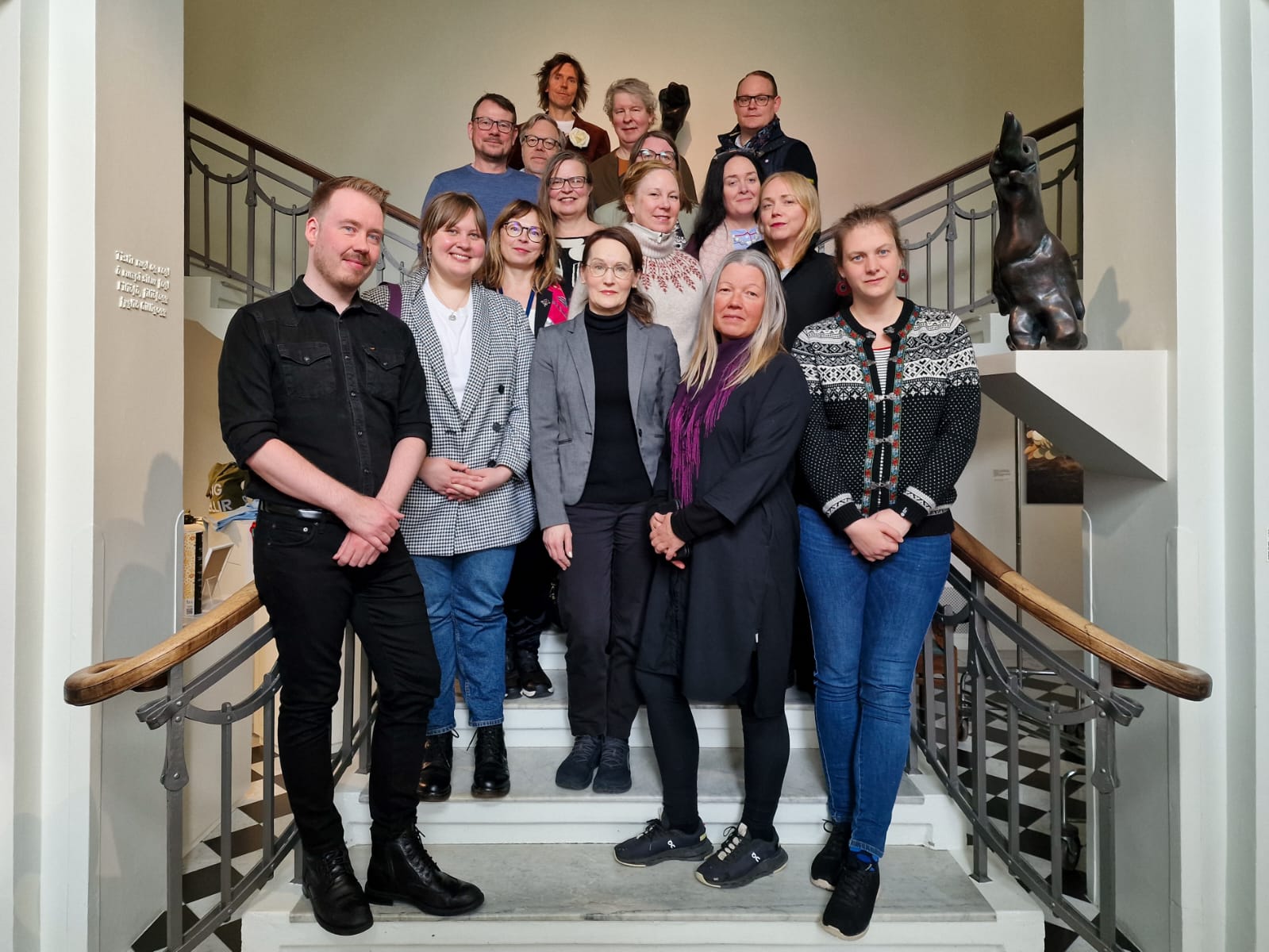
Tekst og foto av Eero Ehanti, styreleder for ICOM Nord regional alliance
Björk, the brilliant Icelandic musician, was sitting in the cafe of the Nordic house, where we were having our ICOM Nord spring conference. Such a small place, Reykjavík, I thought. She was lunching there while we talked about museum matters in our new larger regional alliance composition, now including the Baltic countries too.
This is ICOM Nord, the Northern European element, voice and ear within the worldwide network of the International Council of Museums.
‘I just saw Björk a few days ago in Venice, DJ’ing’, said Uula Neitola of ICOM Finland. Yes, it was the opening week of the Venice Biennale and we had all read and heard about the boycotts, resignations and disputes related to the presence of Russia and Israel.
It’s a world of fast movement of people, goods and ideas, but also of much distress and political turmoil. This was reflected in the Venice Biennale and the Eurovision Song Contest too, another significant event coinciding with our conference. Not to compare our event to either one of those, but we too, museum people, are in the politics and tensions spreading in the world, we cannot opt to stay out.
ICOM has reacted for instance with statements, the most recent of which is the very significant Call for the Protection and Respect of Human Lives and Cultural Heritage During Conflict.
It was a different time in 2019 when we met last time in Iceland. I remember a very good keynote about Arken Museum of Contemporary Art in Denmark, about their work with communities for instance. I looked into my notes from that day and found that I’d written down their vision: ‘the art museum shall support and strengthen the ethical dimension, humanism, and democracy in future Danish and international society”.
That vision definitely resonates still, seven years later. But something is different, the mood has changed and discussion has shifted. There’s way more risk preparedness, even readying for military conflict situations. Which some of our colleagues very nearby are facing very concretely.
Decolonization is another important stream in today’s museum talk and that too was reflected in our conference in the beautiful Nordic House, drawn by the Finnish architect Alvar Aalto.
Very homey for us Finns, being inside such architecture with its organic shapes and tones of warm wood and glazed deep blue tiles. Rows of handgrenade lamps, bronze door handles. We were fortunate to be welcomed there by Sabina Westerholm, Director of the Nordic House, who started our conference by presenting their many activities. Such a beautiful place to gather and a very apt one, for us ICOM Nord folks.
‘I always wanted to organize an event here’, Hólmar Hólm, ICOM Iceland Chair and ICOM Nord Secretary, who together with the ICOM Iceland team put this all together and even made beautiful, thoughtful graphics for it, a detail I much appreciate. Visuals matter, aesthetics too.
Antonio Rodriguez, the President of ICOM, greeted us through a video, reminding us all of the importance of the Nordic voice within the network, before we got to the keynotes, first of whom was Guðrún Nordal, Director of the Árni Magnússon Institute for Icelandic Studies, who told us about the living legacy that is the manuscripts which returned to Iceland from Denmark in a lengthy process.
‘This is a world in words’, she said, of the Eddic poetry, sagas and scholarly texts written in Icelandic, from the 13th century onwards, a hugely significant body of human understanding, which is now kept in the institute just a stone-throw away from the Nordic House, in a spot of great historical significance.
It used to be a football pitch. Spirit of place manifests in so many forms, and so does the significance of physical items. It was touching to see images of huge crowds of Icelanders welcoming those manuscripts back home in the port of Reykjavík. The very same manuscripts we saw later on in the Árni Magnússon Institute’s exhibition where they lay in the darkened display cases, in constantly rotating order to facilitate their preservation and continued accessibility.
Only old books? No, it’s identity and history too.
When I later on walked in the breathtaking gorges of Þingvellir, where the North American and Eurasian tectonic plates meet – or actually drift apart, a few centimeters every year – I couldn’t help thinking of those manuscripts and the world in words they contain. The stories and also laws, which were set right here at Þingvellir, the very spot of the world’s oldest Parliament.
Yes, places do matter and it makes a huge difference where items are located, who owns them and how they are made accessible and used. The way items live their life is what matters. We have a living legacy in our care.
Yes, in our care. We museum professionals do not own them, it’s just our turn to take care of them, it’s our watch.
This is how I feel and it’s also how the ethics code for museums puts it, the code which is renewing right now.
I read the draft text of the new code one morning in Reykjavík when the time difference once again woke me up way too early, all of it, really carefully. I liked it. There’s digitalisation, climate crisis and decolonizing points of view all throughout the text. It understands that museums are diverse and not all can easily comply with all of what’s stated in the code. I also like how it starts with society to point out that it is for the people we do museum work. One thing I particularly like is that science, traditions and belief systems of indigenous people and others are all equal in the code. This is not forcing Western museological thinking as the one true way.
And the code doesn’t call for truth or true information but reliable, credible, well-founded information, which is a good way to acknowledge that there seldom is a clear truth and museums should not claim to be those who hold and present it.
One thing the code states very clearly, and has always done so, is that museum professionals should not participate in any way in violations of human rights. This is so against anything museums stand for, as proponents of peace.
Yet, throughout history destruction of cultural heritage has been used as a means for military actions. Deliberate destruction and looting of sites and places of great societal importance is a strong weapon to weaken a people’s coherence and sense of belonging. It is still happening, right now.
ICOM Nord board member Søren la Cour Jensen gave a talk where he drew parallels between what’s happening in Ukraine right now and how the Greenland issue has been developing. He has first-hand experiences of both and it was chilling to understand how geopolitics affect people, communities and nations, museums too, eventually. This goes very deep to the core of humanity and sense of belonging and safety. From our point of view it steps very much on the grounds of international law and conventions and our very own code of ethics too.
What happens when ICOM members provenly break the code, the only document we all swear to respect when given the ICOM membership?
Nothing. So far, that is how we at ICOM Nord see it, and this issue took the largest part of our board meetings in Iceland. Now that the ethics code is being renewed – we truly hope that it is voted to power in the upcoming annual meetings in Paris – it is a momentum to turn gazes on how our organization acts when individual members breach it. What are the consequences, what is the process? No matter where, in which nodule of this huge museum network of ours, there should be a process to handle it.
This is a discussion ICOM Nord now sets to initiate, with the Executive Board of ICOM, in good cooperation with other regional alliances and committees
It’s a discussion that needs to be continued. We need to fight for our code and keep on the track of peace-work which is essentially what ICOM exists for, I believe. Because it’s under threat, the cultural heritage in our care, both physical and digital.
‘Our museums’ databases have been cyber-attacked and it’s caused financial loss of hundreds of thousands of Euros and corruption of data’, said Katrīna Kūkoja of ICOM Latvia and ICOM Nord board member. Yes, it’s a chilling, worrying moment right now.
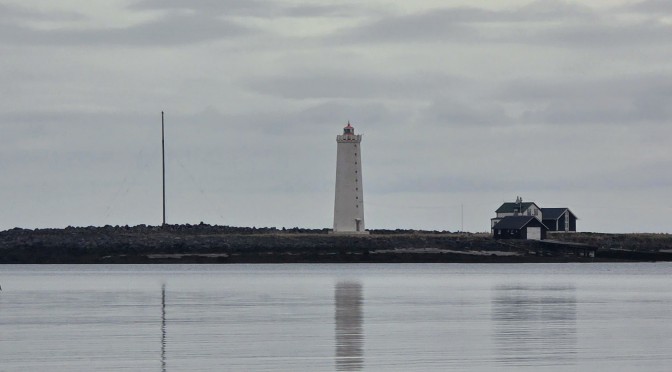
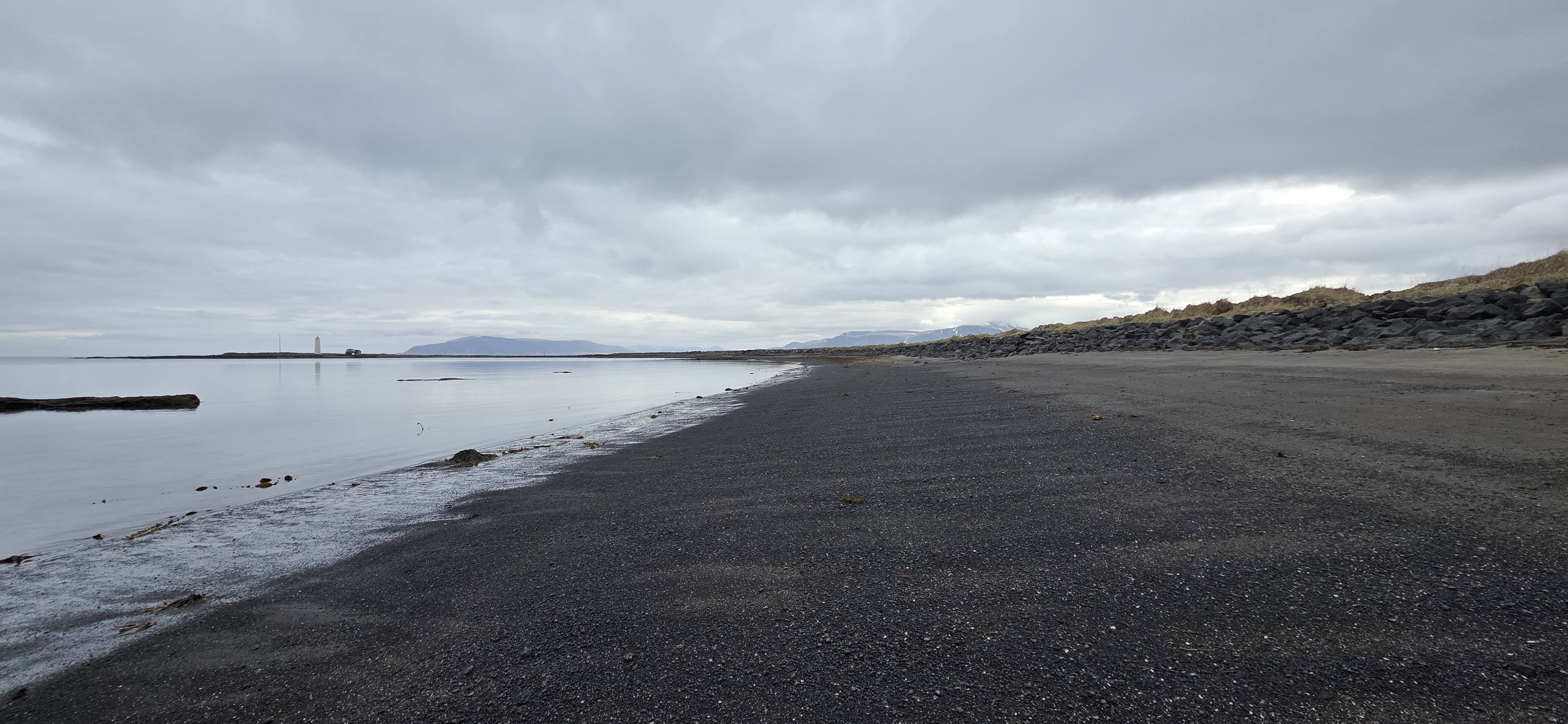
As I ran towards the lighthouse, I listened to Björk’s Human Behaviour, the hypnotic rhythmic song I remember loving on MTV back in the 90s.
“If you ever get close to a human
And human behaviour
Be ready, be ready to get confused
There’s definitely, definitely, definitely no logic…”
She got it, there seems to be no logic in some human behaviour on this planet right now.
Eventually, I couldn’t climb the lighthouse, it was closed. And the ocean, it didn’t roar. Almost dead calm. No whales.